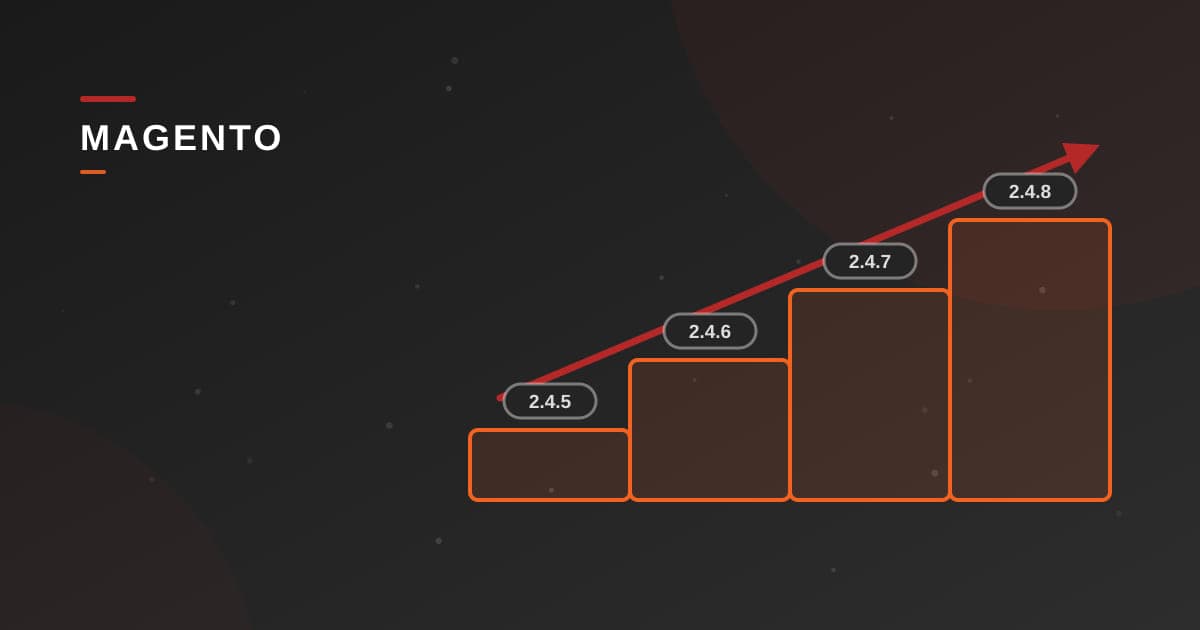
Magento 2 upgrade strategy: the complete guide for a risk-free migration in 2026
Why upgrade?
In 2026, staying on an outdated version of Magento 2 is no longer viable. Between PCI DSS security requirements, performance expectations from Google (Core Web Vitals), and evolving functional needs, each release brings fixes and optimizations.
Risks of outdated versions
- Security: unpatched CVE vulnerabilities expose your platform
- Performance: recent versions optimize caching, loading, and queries
- Compatibility: third-party extensions drop support for old versions
- SEO: Core Web Vitals are better on recent versions
My 5-step methodology
1. Codebase audit
A full audit of custom code, third-party extensions, and dependencies.
2. Staging environment
The upgrade happens first in an isolated environment with anonymized data.
3. Conflict resolution
Incompatible extensions, deprecated APIs, outdated templates — each issue addressed one by one.
4. Automated testing
Unit and integration tests are written or adapted to validate every critical feature.
5. Staged deployment
Production rollout is progressive, with rollback possible at each step.
Conclusion
A well-executed upgrade is 6 to 8 weeks of work for years of peace of mind. Hesitating? Let's talk.
I can help you.
Let's discuss your project.