Product discovery inside AI assistants: what Adobe Commerce's Catalog Agent changes
The announcement in short
On July 27, 2026, Adobe made product discovery on so-called LLM surfaces available in Adobe Commerce (the official announcement). In plain terms: your store can now publish a machine-readable layer of product data, built for AI crawlers and answer engines — ChatGPT, Perplexity, shopping assistants — without changing anything your customers see.
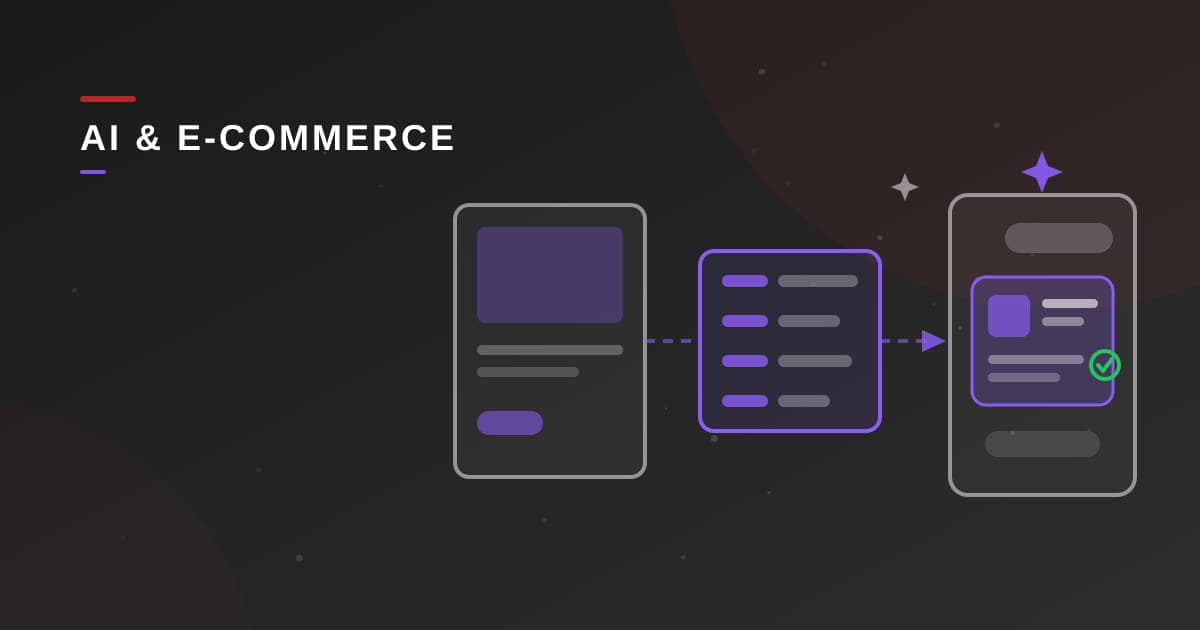
The centerpiece is the Catalog Agent: it enriches product detail pages with structured information pulled straight from the Commerce catalog — attributes, specifications, categories, variants, pricing, availability and product relationships (compatibility, accessories).
Why now
Adobe's own numbers tell the story: AI-driven traffic to US retail sites was up 269% year over year in March 2026. A growing share of buying journeys now starts with a question to an assistant — "show me lightweight trail running shoes for marathon training" — rather than a Google search.
Most storefronts were never built for that kind of reader. The decisive information lives in images, accordions or JavaScript that AI systems handle poorly. If the assistant can't understand your offer, it recommends your competitor's — and you never even see it in your analytics.
How it works
Three points deserve your technical team's attention:
- A parallel layer, not a rebuild. The machine-readable data is published behind the existing storefront: product pages, imagery and the buying journey stay untouched.
- A source-first design. The information comes from the catalog itself, not from scraping or a third-party feed. The prices, stock and variants exposed to AI are the ones in your source of truth — a genuine governance win.
- Optional AI enrichment. Adobe can rework product names and descriptions around real use cases, matching conversational queries instead of keywords.
It all fits into the agentic strategy presented at Summit 2026, alongside the Commerce MCP server and Brand Concierge (Adobe Commerce's AI page).
The limits you should know
The capability builds on the Commerce catalog across deployment models, with no additional license announced. Two caveats, though: access to the integration is still restricted, and the catalog enrichment workflow is described as beta. In other words, you go through Adobe (or your partner) to enable it, and you shouldn't unleash automatic enrichment on your whole catalog without review.
Above all: this layer doesn't replace the fundamentals of AI discoverability. Clean Schema.org structured data, well-maintained attributes and content that works without JavaScript remain the foundation — AI enriches your data, it doesn't invent it.
What I recommend
- Audit your attributes now. Incomplete sheets, sizes buried in images, compatibility never entered: that's what will hold the Catalog Agent back, not the technology.
- Measure AI traffic in your analytics (ChatGPT, Perplexity, Copilot referrers) to establish your baseline.
- On Adobe Commerce: request access. The first properly exposed catalogs will gain an edge in assistant answers.
- On Magento Open Source or another platform: no Catalog Agent, but the same rules apply — Schema.org, sitemap, server-rendered content, llms.txt. Catching up takes longer than getting ahead.
My take
Product discovery increasingly happens away from your site, in conversations you never see. Adobe is one of the first e-commerce vendors to turn that into a concrete product feature rather than a talking point. The building block is young — restricted access, beta enrichment — but the direction is clear: a machine-readable catalog is becoming a commercial asset just like your search rankings. Better to get your data ready before your competitors are the only ones being quoted.
I can help you.
Let's discuss your project.